Shein’s Hong Kong IPO: $3.5 Billion Payout to Investors Amid $26.5 Billion Valuation
Shein's IPO in Hong Kong reveals significant investor payouts amid a valuation drop.

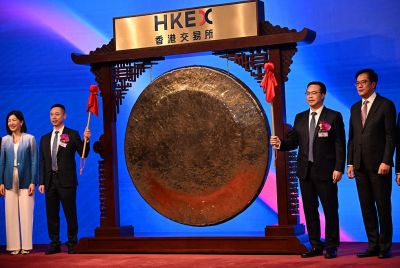
Shein is guiding investors toward a Hong Kong IPO price of about HK$48.56 a share, near the middle of its HK$47.60-to-HK$49.50 range, according to people familiar with the matter cited separately by Bloomberg and Reuters. That would value the fast-fashion retailer at roughly $26.5 billion, raise about HK$13.6 billion ($1.7 billion), and set trading in stock code 00625.HK to begin September 1 after a final price is confirmed by August 31.
The valuation is the headline. The bill underneath it is the story.
Shein's prospectus, filed with the Hong Kong Stock Exchange, shows the company will pay up to $3.5 billion in cash and bonus shares to a group of its own late-stage private investors — nearly double the fresh money the IPO itself is expected to raise. The payments exist because those investors bought in at valuations the IPO no longer supports: $98.2 billion for shares bought in a 2022 round, $60.5 billion for an earlier 2022 tranche, and $64 billion for a 2023 round. An IPO priced near $26 billion triggers contractual protections written into those deals, and Shein now has to make good on the difference.
Who gets paid, and why
The prospectus names the investors eligible for the payouts: entities linked to Boyu Capital, Tiger Global, General Atlantic, Thrive Capital, Mubadala and Brookfield, among others, plus a wider group of preferred shareholders including Coatue, D1 Capital and Reliance Retail. At the bottom of the pricing range, Shein could pay up to $2.2 billion in cash under those conversion-adjustment terms and issue 19.6 million extra shares at no cost, on top of roughly $1.33 billion in separate payments already agreed with the same group of late-stage backers.
Some of those same names are also stepping in as cornerstone investors in the IPO itself. Boyu, Tiger Global and General Atlantic are among the cornerstones alongside Tencent Holdings, taking a stake at the new, lower price even as they collect compensation tied to the old, higher one.
It is the arithmetic of a listing that took years longer than planned. Shein spent roughly four years trying to list in New York and London, both of which stalled over regulatory and supply-chain concerns, before winning approval from China's securities regulator in July and turning to Hong Kong. Over that stretch, its private valuation fell from close to $100 billion to about a quarter of that.
Demand from Hong Kong retail investors has been muted. "Shein didn't list in Hong Kong when it was in its prime, why should we take them now," is how Alvin Cheung, associate director at Prudential Brokerage in Hong Kong, described investor sentiment, adding that appetite for new listings had cooled generally after an Asian market correction in July. Shein did not respond to a request for comment on the pricing, Reuters reported.
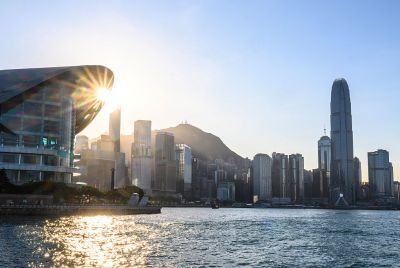
Shein's supply chain remains anchored in Guangzhou, in the Greater Bay Area, where the bulk of its roughly 5,400 contract manufacturers are based — the production base for a company now going public one border crossing away. The listing also lands inside a record year for Hong Kong's exchange: the bourse raised HK$210.2 billion across 87 new listings in the first half of 2026, up 92% from a year earlier, a boom this deal will test the edges of once trading opens.
- MOST POPULAR IN Companies