Hong Kong Court Convicts Tiananmen Vigil Leaders In Landmark National Security Case
Lee Cheuk-yan and Chow Hang-tung face up to 10 years in prison under Beijing's national security law.
KEY POINTS
- Lee Cheuk-yan, 69, and Chow Hang-tung, 41, were found guilty of inciting subversion and face up to 10 years in prison
- The pair once led the Hong Kong Alliance, which organized the city's Tiananmen vigils for three decades
- Legal experts say the case reflects the broader erosion of civil liberties under Beijing's security law
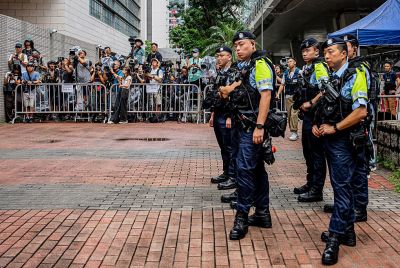
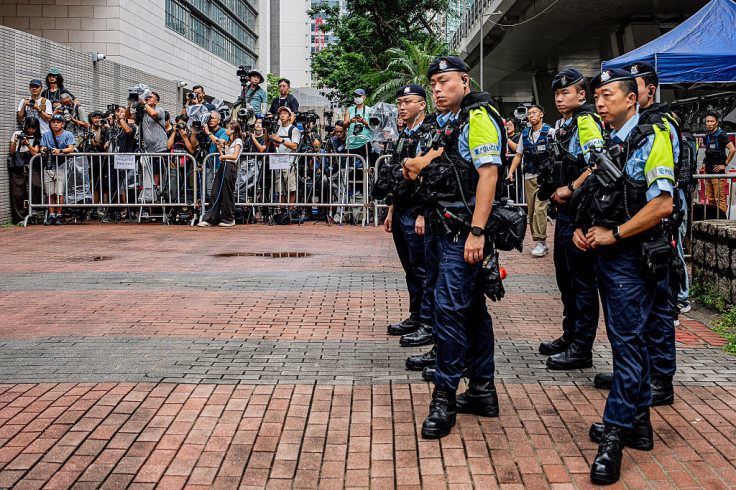
A Hong Kong court on Friday convicted two of the city's most prominent pro-democracy figures in a closely watched national security trial, in a ruling seen as a bellwether for how far judicial independence has eroded since Beijing tightened its grip on the territory.
Lee Cheuk-yan and Chow Hang-tung, former leaders of the now-disbanded Hong Kong Alliance in Support of Patriotic Democratic Movements of China, were found guilty of inciting subversion under the China-imposed national security law by a panel of three government-vetted judges. They now face a maximum sentence of 10 years behind bars, with sentencing expected at a later date. Prosecutors had argued the pair "endangered national security in the name of human rights," while Chow, who represented herself in court, told the judges in May that the law itself was effectively on trial.

Decades Of Vigils, Now Silenced
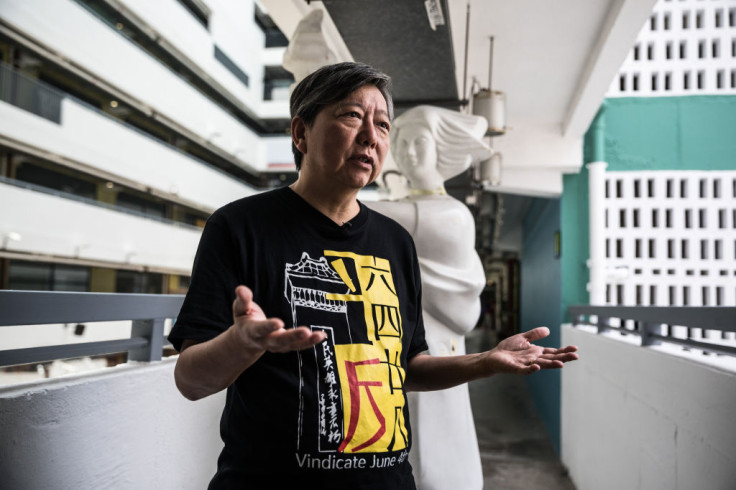
For 30 years, the Alliance organized Hong Kong's annual candlelight vigil marking the 1989 Tiananmen Square crackdown, an event that once drew tens of thousands of participants and stood as the only large-scale public commemoration of the massacre anywhere on Chinese soil. Authorities banned the gathering in 2020, officially citing COVID-19 restrictions — a decision that came just weeks before Beijing imposed the sweeping national security law in the wake of Hong Kong's massive 2019 protest movement.
Since then, prosecutors have used the law to systematically dismantle the city's opposition, jailing activists, shuttering pro-democracy outlets and disbanding civil society groups, including the Alliance itself.
'Party-Led Judiciary'
Legal scholars say Friday's verdict will be closely scrutinized as a signal of how closely Hong Kong's courts now mirror those on the mainland. Eric Lai, a senior fellow at the Georgetown Center for Asian Law, has pointed out that the inciting-subversion charge has long been deployed in mainland China against human rights lawyers, activists and intellectuals — including Nobel Peace Prize laureate Liu Xiaobo, who died in custody in 2017.
Prosecutors have rejected the notion that the case is politically motivated, arguing instead that the Alliance's core slogan calling for an end to one-party rule amounted to a call to overthrow the Chinese Communist Party's leadership through unlawful means. Defense lawyers have disputed that framing throughout the trial.
If convicted, Lee and Chow are expected to be sentenced at a later hearing. A guilty verdict would mark the latest blow to a pro-democracy movement that has been almost entirely extinguished in the six years since the security law took effect, with many of its former leaders now imprisoned, in exile or silenced.
- MOST POPULAR IN Politics