Hong Kong Companies Are Posting Blowout Earnings. The Index Is Still Below Where It Started the Year.
Hong Kong's robust interim earnings are overshadowed by global economic concerns, keeping the market flat.
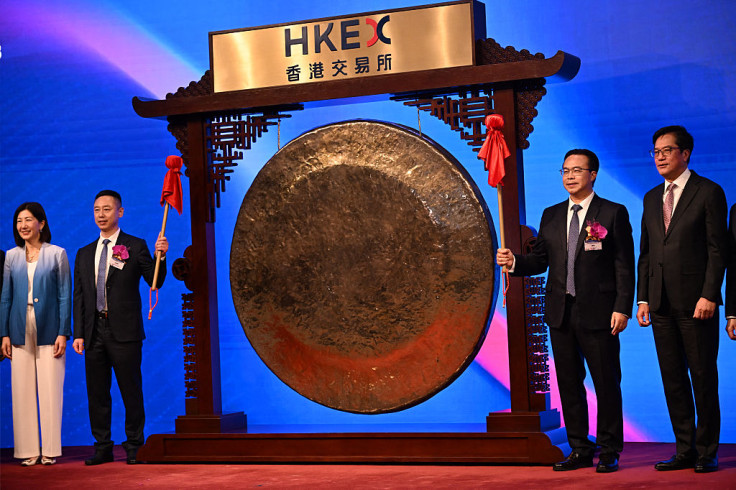
Hong Kong's interim results season has been unusually strong, and the market has barely registered it.
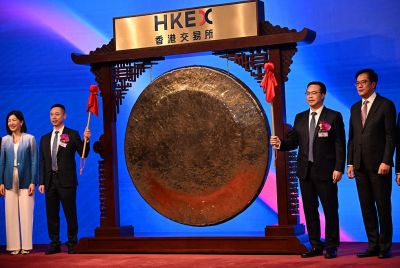
The exchange operator itself set the tone. HKEX reported first-half revenue up 19% year on year, attributable profit up 24% and an interim dividend lifted 24%, sending its shares 1.6% higher to HK$411.40 on Wednesday. Hong Kong and China Gas climbed after posting a 23% increase in first-half profit.
Thursday brought a larger number still. Hong Kong stocks closed higher, boosted by pharmaceutical and gold shares, with the index gaining close to 1% while technology heavyweights were mixed. AIA reported first-half net profit up 69% year on year to US$4.29 billion, or HK$33.46 billion, with the value of new business in its Hong Kong segment growing 10% to US$1.17 billion.
AIA shares fell 0.34% on the day.
The arithmetic of a flat market
Set those results against the index level and the disconnect is difficult to miss.
The Hang Seng closed at 25,495 on Wednesday, little changed, recovering from an earlier decline. It finished the first trading day of 2026 at 26,384 — a six-week high at the time, reached on optimism about Chinese technology and signals of proactive macro policy.
Nearly eight months later, after a first half in which Hong Kong raised HK$210.2 billion through IPOs, average daily turnover climbed to HK$283 billion and the territory's economy grew 5.1%, the benchmark sits below where it began the year.
What is capping it
The drag is not local, which is why strong domestic earnings have not shifted it.
Wednesday's gains were held back by a cautious global backdrop, with investors digesting a selloff in technology shares, elevated US Treasury yields, higher oil prices and renewed Middle East tensions. The same combination has been moving Western markets through August: US indices fell for three consecutive sessions from 17 August on elevated global bond yields and oil prices, after the S&P 500 had closed at a record on 12 August when inflation data came in cooler and oil eased.
Both variables sit outside Hong Kong's control, and one of them is being set in a shipping lane. Analysts have warned that a prolonged closure of the Strait of Hormuz could push crude substantially higher, while the direction of US rates — transmitted directly into Hong Kong through the currency peg — has been complicated by weakening US consumer sentiment and retail sales.
There is also a structural explanation that has nothing to do with sentiment. Heavy new issuance expands total market capitalisation without lifting the prices of existing constituents, and the Hang Seng measures the latter. A record IPO year and a flat index are less contradictory than they appear.
The sell side is not discouraged
Analyst positioning suggests the earnings are being taken seriously even if prices are not moving.
CGS International maintained an Add rating on HKEX with substantial implied upside, premised on strong average daily turnover growth through the 2026 to 2028 forecast period, and raised its earnings-per-share estimates by 1.4% to 1.6%. The broker identified better-than-expected Hang Seng performance and a rebound in Southbound inflows as potential re-rating catalysts.
It also named the risks plainly: lower rates would hurt investment income, and escalating regulatory risk affecting the IPO market would undermine the volume story. Both are worth holding onto, because HKEX's results are a leveraged bet on exactly the activity that has driven this year — if listings slow, the revenue line slows with them.
What to watch
The remainder of the interim results season is the near-term test. If more constituents deliver at the level HKEX and AIA have, and the index still does not move, the gap becomes harder to attribute to earnings uncertainty.
The second is Southbound flows. Mainland buying through Stock Connect has been a significant support for Hong Kong valuations, and a rebound is the specific catalyst analysts have identified.
The third is oil. It is currently the clearest single link between Middle East geopolitics and Hong Kong equity prices, and neither end of that chain is under local influence.
For now, Hong Kong has the earnings and the listings. What it does not have is a market willing to price them.
- MOST POPULAR IN Business