Central’s Office Rents Are Back to 2022 Levels. Kowloon East’s Are Still Falling.
Analyzing the contrasting recovery patterns in Hong Kong's office and residential real estate markets.
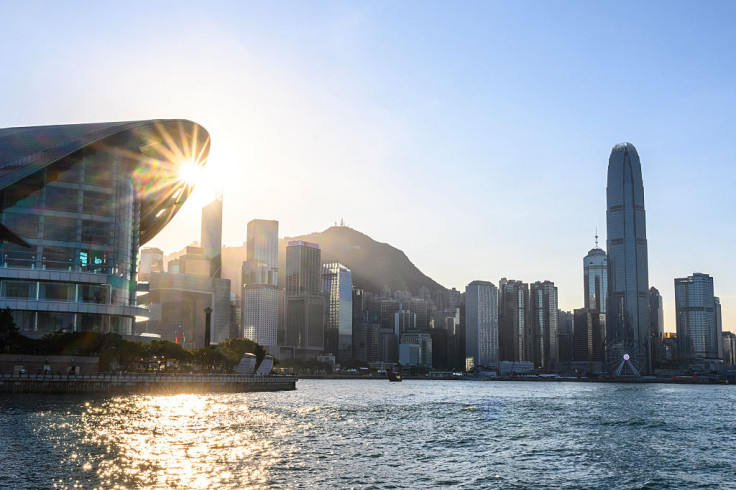
Hong Kong's property market has turned. Whether that statement is true for any given building depends almost entirely on where it stands.
Citywide Grade A office vacancy fell 0.6 percentage points to 16.2% in the second quarter, a second consecutive quarterly decline, with overall rents rising 2.0% quarter on quarter and 3.5% year to date, according to CBRE. That reverses the declines recorded through the second half of 2025.
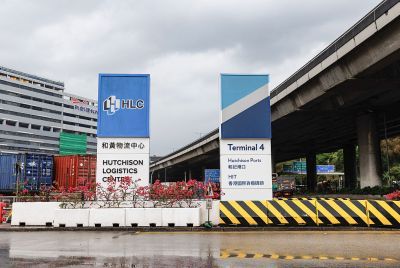
The aggregate conceals the actual picture. Central rents grew 10.7% year to date, driven by Central A1 rents jumping 18.5% — back to levels last seen in the second quarter of 2022. Greater Tsim Sha Tsui recorded a fourth consecutive quarter of growth at 1.2%. Decentralised submarkets continued to report quarter-on-quarter declines.
For context on how far those decentralised districts have fallen: across 2025, rents in Hong Kong East dropped 10.5% and Kowloon East declined 7.9%.
Central's recovery has a specific cause
The reason the core is outperforming is not a general improvement in sentiment. It is traceable to a particular flow of money.
JLL's monthly market analysis attributes Central Grade A rental growth to IPO-related activity and wealth inflows, with the office leasing market recording positive net absorption of 279,000 sq ft in June. Cushman & Wakefield put second-quarter citywide net absorption at 396,100 sq ft, with new leases driven mainly by banking, finance and insurance occupiers, and Greater Central rents up 4.1% quarter on quarter against a citywide figure of 1.9%.
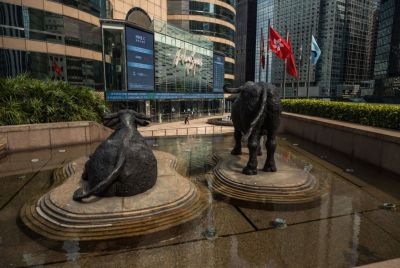
That is the same capital markets boom that has produced HK$328.2 billion in IPO proceeds over seven months, arriving in the property market as demand for prime office floors from the financial firms executing those deals. Banking and insurance tenants take space in Central. They do not take space in Kowloon East.
The divergence is therefore not a timing lag that decentralised districts will eventually close. It reflects which industries are expanding and where those industries sit.
The residential market is the stronger story
Housing has recovered more broadly than offices, and on volume the numbers are striking.
Second-quarter residential transactions exceeded 22,150 units, up 19% quarter on quarter and 32% year on year — the highest quarterly total since the second quarter of 2021, according to Cushman & Wakefield. Home prices rose 2.5% across April and May, bringing a cumulative increase of 7.4% over the first five months, with growth recorded across segments. June marked the highest monthly transaction volume since all property cooling measures were removed in the first quarter of 2024.
Supply is tightening behind that demand. Private residential completions totalled roughly 18,450 units in 2025, down 24% from 24,261 the previous year, with forecasts pointing to approximately 16,980 units in 2026 and 15,360 in 2027. Only one site was awarded under the government's Land Sale Programme in the second quarter, with an estimated capacity of 1,332 units, though Knight Frank notes third-quarter disposals are expected to provide more than 10,000 units, predominantly through railway property developments.
The caveat is the one that always applies here: Hong Kong remains the world's least affordable housing market, a position it has held for well over a decade. Rising prices against a tightening pipeline is not straightforwardly good news for residents.
Financing is the constraint
The variable that could interrupt all of this is the cost of money, and Hong Kong does not control it.
One-month HIBOR rose from 2.24% on 31 March to 2.94% on 30 June, and CBRE notes the negative yield carry condition affecting many Hong Kong commercial properties persists — meaning rental income on a leveraged purchase does not cover financing costs. That is why investment activity remains dominated by end-users rather than financial buyers.
Investment volumes reflect the split. CBRE recorded a 15% year-on-year drop to HK$8.1 billion in the second quarter, even as the first-half figure rose 50% to HK$23.1 billion. Cushman & Wakefield, measuring large non-residential transactions above HK$100 million, put first-half volume at HK$23.2 billion, up 84%.
Because the Hong Kong dollar is pegged to the US dollar, local rates track American monetary policy rather than domestic conditions — and US retail sales and consumer sentiment both weakened in July, leaving the Federal Reserve's path, and therefore Hong Kong's borrowing costs, unusually hard to read.
Retail has quietly turned
The least-covered part of the recovery may be the most telling. High street vacancy in Causeway Bay and Central returned to zero in the second quarter, with retail sales supported by rising inbound visitor numbers and a stronger renminbi.
JLL noted that June saw several local retailers return to high street locations in core districts after years of being priced out by elevated rents. That is a different kind of recovery from luxury brands expanding — it suggests rents have corrected far enough to admit tenants the market had excluded.
What to watch
Forecasts for office rents diverge meaningfully. Cushman & Wakefield expects overall office rental levels to rise 4% to 6% across 2026, a notably more optimistic view than the flat-to-modest projections issued at the start of the year.
The question underneath is whether Central's strength eventually pulls the decentralised submarkets up, or whether Hong Kong is settling into a permanently two-tier office market with a well-occupied core and a structurally oversupplied periphery. Citywide Grade A values sit more than 50% below their peak, and J.P. Morgan has remained cautious on the sector, characterising notable transactions as isolated bright spots rather than evidence of broad recovery.
For now, the recovery is real, and it has a postcode.