Baidu’s Boardroom Reshuffle Was the Price of Its HK Upgrade
Baidu transitions to a dual-primary listing on the Hong Kong Stock Exchange, opening doors for mainland investors.

Two weeks before its Hong Kong shares lose the single letter that has kept mainland money out for five years, Baidu rebuilt two of its own board committees to get there.
The company's shareholders approved the final paperwork at an extraordinary general meeting in Beijing on August 26. A day later, Baidu confirmed that its voluntary conversion from a secondary to a dual-primary listing on the Hong Kong Stock Exchange takes effect September 1. No new shares change hands. The stock marker "S" disappears from both the HKD counter (9888) and the RMB counter (89888) that day. sec
What's changed is who signs off on Baidu's books. Hong Kong's listing rules treat a primary issuer's boardroom differently than a secondary one's, and Baidu says it has already reconstituted its audit committee and its nominating and corporate governance committee to comply. The mechanics were laid out nine days earlier, in the fine print of an unrelated earnings release: Yuanqing Yang joined the audit committee, leaving it chaired by Xiaodan Liu — a former CEO of Huatai United Securities — alongside Jixun Foo and Yang himself. Liu, in turn, joined the nominating and governance committee, chaired by Foo. Every seat on both committees now belongs to one of Baidu's four independent directors, rotated between the same three people. sec
That's a compliance box most secondary listings never have to check. It also happens to be the actual cost of what the market is pricing in this week.
Baidu's Hong Kong-listed shares gained more than 4% in Thursday trading, according to Sina Finance's intraday feed, on the same premise driving the stock since July: dual-primary status is the entry ticket to Stock Connect, the cross-border link that lets mainland investors buy Hong Kong shares directly. Secondary-listed stocks don't qualify. Baidu's have been secondary-listed since a March 2021 debut, invisible to that pool of capital ever since.
Getting the ticket doesn't punch it automatically, though. Inclusion runs through the Shanghai and Shenzhen exchanges' twice-yearly review windows, in March and September, and depends on trading-history and liquidity tests those exchanges apply after a stock converts. Shanghai Stock Exchange officials have explained the mechanism using Bilibili as the test case: after Bilibili's shift to primary listing took effect, it still needed six months and 20 trading days on the Hong Kong market before it even became eligible for inspection — pushing its actual inclusion to the following March's review, roughly five months later. Shanghai Stock Exchange
Baidu doesn't have that problem. It has traded in Hong Kong for more than five years, which puts it in a different bucket than Bilibili's fresh listing. The clearest precedent is Alibaba, whose own dual-primary conversion took effect August 28, 2024 — and which was added to the Shanghai-Hong Kong and Shenzhen-Hong Kong Stock Connect programs just 13 days later, on September 10, 2024. NetEase's conversion this June ran even faster: it was added to the Stock Connect eligible list the same day its dual-primary status took effect, June 30 — months ahead of the first-quarter-2027 timeline analysts had penciled in. Both companies, like Baidu, had already accumulated years of Hong Kong trading history before converting. The pattern so far: long-listed secondary issuers get waved through fast; fresh dual-primary IPOs wait out the clock. Alibaba GroupiTiger
Baidu's conversion lands right at the next review window. Whether it clears inspection in time is up to Shanghai and Shenzhen's exchanges, not the company — but the Alibaba and NetEase precedents are the closer read on what happens next, not Bilibili's five-month wait.
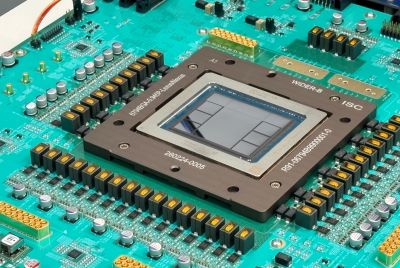
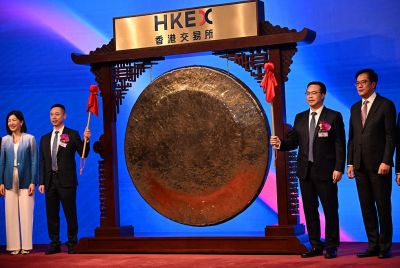
The exchange operator has its own stake in the outcome. Hong Kong Exchanges and Clearing executives told analysts on an August 19 earnings call that demand for dual listings is concentrated in capital-intensive sectors — semiconductors, robotics and AI — and that the exchange sees the two listing venues as complementary rather than competing with mainland boards. Baidu's own AI chip unit, Kunlunxin, is separately working toward a listing of its own, one more data point in the same pipeline HKEX was describing. Investing.com
- MOST POPULAR IN Companies