Hong Kong’s Tech Rally Is Losing Ground To Shanghai’s Rising Nasdaq Rival
AI Hardware Makers Choose Shanghai Over Hong Kong for Listings
KEY POINTS
- Shanghai's STAR Market has surged more than 30% since the second quarter, outpacing Hong Kong's tech-heavy benchmark
- AI hardware makers like Cambricon, Moore Threads and MetaX have chosen to list on the mainland rather than in Hong Kong
- Hong Kong is now scrambling to widen its tech index to compete for the AI listings it's been missing out on
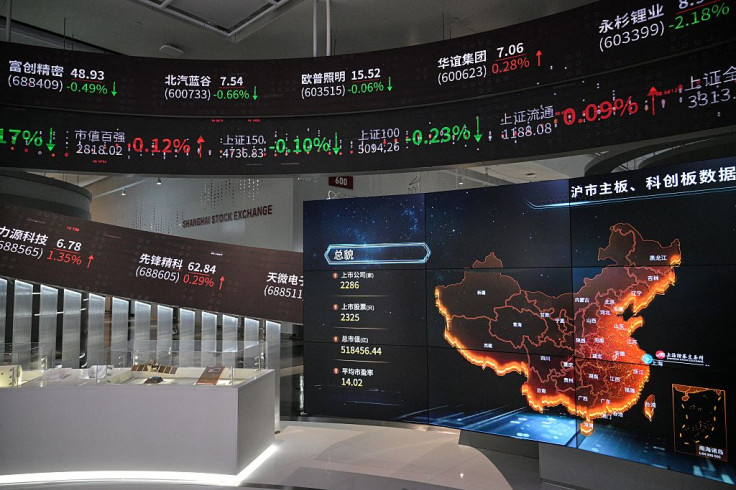
A rally in Chinese technology stocks is increasingly playing out on Shanghai's turf rather than Hong Kong's, as the mainland's Nasdaq-style STAR Market pulls ahead of the former British colony in the race to capture the country's booming AI and semiconductor boom.
The STAR 50 Index, which tracks the largest listings on Shanghai's Sci-Tech Innovation Board, has climbed more than 30% since the start of the second quarter, fueled by a rally in chip stocks and heavy buying from both domestic and foreign investors. Hong Kong's Hang Seng Tech Index, by contrast, has struggled to keep pace and was down roughly 11% for the year as of early June, even as the broader Hang Seng Index posted some of its strongest gains in months.
Where The AI Names Are Listing
The divergence comes down to a structural problem for Hong Kong: many of the companies investors most want exposure to simply aren't listed there. Chinese GPU and AI-chip makers — including Cambricon, Moore Threads, MetaX and Hygon — have all gone public on mainland exchanges rather than in Hong Kong, while optical-component makers like Eoptolink and Innolight listed in Shenzhen. Because Hong Kong's indices can only include companies that actually trade on its exchange, the city has been structurally underweight the exact hardware names driving the AI trade.
Launched in 2019 at the direction of President Xi Jinping, the STAR Market was designed to keep high-potential Chinese tech companies from listing abroad and to give Beijing a domestic venue capable of rivaling Nasdaq. Seven years on, that ambition looks increasingly realized: the board now anchors a market worth more than $2 trillion and has become the primary listing venue for firms central to China's push for self-sufficiency in chips and AI, sectors Washington has worked to restrict.
Hong Kong Fights Back
Hong Kong hasn't ceded the fight entirely. The city opened 2026 with its strongest rally in months, driven in part by the blockbuster debut of mainland AI chipmaker Shanghai Biren Technology, whose shares jumped nearly 120% on their trading debut and drew retail demand oversubscribed more than 2,300 times over — the first Hong Kong listing by a homegrown GPU developer. Exchange operator Hang Seng Indexes has since proposed revamping the Hang Seng Tech Index to add more high-growth constituents, part of a broader push by the city to widen its exposure to AI and challenge Nasdaq's dominance as a listing venue for the sector.
Still, some companies that already listed in Hong Kong are now eyeing a second listing in Shanghai to tap deeper pools of mainland capital, underscoring how much gravitational pull the STAR Market now exerts even over firms with an existing foothold in the city.
Analysts remain divided on how long the mainland's advantage will hold. Some ranked the STAR Market as the most attractive destination for Chinese tech investment for now, with Hong Kong a step behind — though the size of foreign inflows into both markets suggests investors are, for the moment, betting on China's AI ambitions broadly rather than picking a single winner between the two exchanges.
- MOST POPULAR IN Business