Peru’s New Government Commits To Hong Kong Trade Deal, Says Nothing About Beijing
Peru aims to strengthen its role as a commercial bridge between South America and the Asia-Pacific region.
KEY POINTS
- Prime Minister Luis Galarreta pledged to bring Peru's free-trade agreement with Hong Kong into force in 2026
- Peru wants to position itself as a commercial bridge between South America and the Asia-Pacific region
- Notably absent from the government's policy address: any mention of mainland China or the Chinese-built Chancay megaport
Peru's new government has committed to activating its free-trade agreement with Hong Kong this year, even as it stayed conspicuously quiet on its broader relationship with mainland China and the Chinese-operated megaport reshaping the country's Pacific coastline.
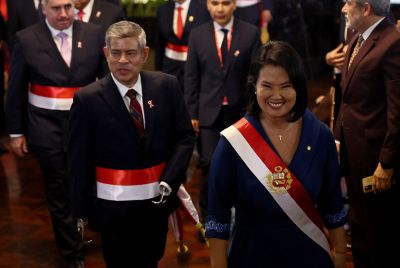
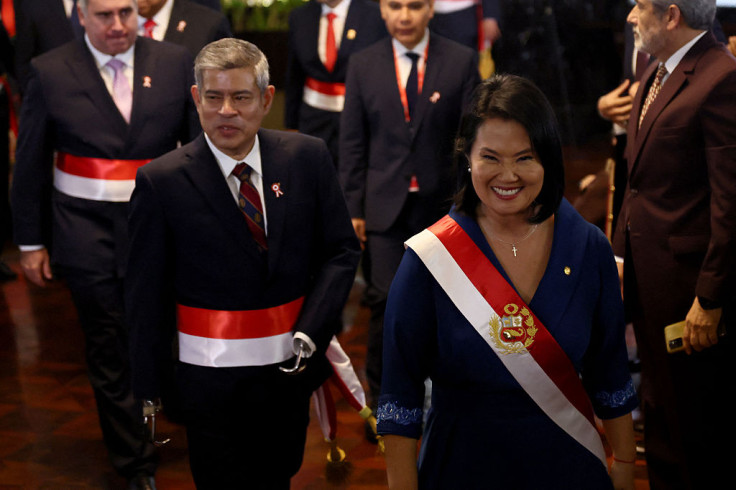
Prime Minister Luis Galarreta laid out the pledge Thursday in an address to Peru's Chamber of Deputies, framing continued commercial openness as a cornerstone of President Keiko Fujimori's administration. "During 2026, we will promote the entry into force of the free-trade agreement with Hong Kong, advance new agreements and promote regional exports," he told lawmakers, adding that Peru's long-term ambition is to serve as a trade, investment and services platform linking South America to the Asia-Pacific, while maintaining its role in APEC and other regional economic blocs.
That single line was the only explicit reference to Hong Kong in an 18-page policy address that otherwise focused on domestic security, economic growth, infrastructure, mining investment and government reform.
A Notable Silence
What the speech didn't mention was just as striking: neither mainland China nor the Chinese-built Chancay megaport, operated by Cosco Shipping, came up at all. The port has become one of the most closely watched Chinese infrastructure investments in Latin America, and its regulatory and legal status in Peru has drawn scrutiny from both Washington and Beijing in recent months.
The omission leaves open questions about how the new Peruvian government intends to navigate its relationship with Beijing more broadly, even as it moves ahead with the narrower, Hong Kong-specific trade agreement.
- MOST POPULAR IN World