DeepSeek’s 1,100% Price Hike: Why Zhipu Emerges as the Top AI Stock in Hong Kong
JPMorgan favors Zhipu's stable pricing strategy over DeepSeek's steep price hikes

Two of China's biggest AI labs made opposite bets on pricing in the same week — and Wall Street just told Hong Kong investors which one it thinks will win.
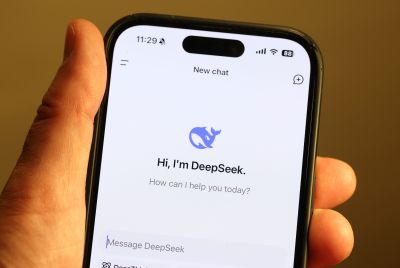
DeepSeek's new peak-hour rates for its V4 model family took effect at 16:00 UTC on August 16 (early August 17 in Hong Kong), with some token categories costing more than 11 times what they did a day earlier. Two days before that, Beijing-based Zhipu — which trades on the Hong Kong exchange as Knowledge Atlas Technology (HKEX: 2513) — released its GLM-5.3 model at the same prices it has charged since June.
JPMorgan's read on that split: Zhipu is now the more investable stock. In a research note reported by BigGo Finance on August 17, the bank raised its target price on Zhipu to HK$1,800 from HK$1,600 while keeping an "Overweight" rating, arguing that companies with pricing power for frontier-level AI are worth more than those competing purely on cost.
Why DeepSeek raised prices
DeepSeek had warned developers on August 6 that a "significant" increase was coming, without giving numbers. When the new rate card landed 10 days later, it replaced flat, round-the-clock pricing with separate peak and off-peak tiers. V4-Flash output tokens went from a flat $0.28 per million to $1.32 at peak, according to Yahoo Finance, while V4-Pro output rose from $0.87 to $3.96 at peak. The steepest jump hit cache-hit input tokens, which had been priced at a fraction of a cent and rose by more than 1,100% at peak hours — the figure now attached to most coverage of the move. Off-peak rates are set at half the peak level, still above DeepSeek's old flat pricing.
DeepSeek framed the increase around surging demand straining its computing capacity. The company has also been raising outside capital, closing a funding round of more than $7 billion in June and reportedly seeking close to $8 billion more.
Zhipu didn't move its prices at all
GLM-5.3 launched on August 14 built on the same roughly 743-billion-parameter base model as its predecessor, GLM-5.2, with Zhipu attributing its gains entirely to post-training rather than a larger model. The company reported the new version's coding benchmark scores jumped sharply over GLM-5.2's, and its API pricing stayed exactly where GLM-5.2 left it.
That combination — a real capability jump with no price increase — is what JPMorgan's note leaned on. The bank introduced what it called a "Pareto frontier" framework, rating a model highly investable when no rival can match its capability at the same price or its price at the same capability. It raised Zhipu's 2026-2030 revenue forecasts by 6% to 10% and set the new HK$1,800 target using a 20-times 2030 earnings multiple.
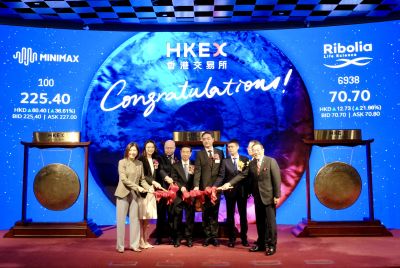
The bank was less enthusiastic about Zhipu's closest listed rival. It also lifted MiniMax's target, to HK$260 from HK$160, but only to a "Neutral" rating, framing the move as MiniMax benefiting from DeepSeek's now-higher prices rather than from any capability gain of its own.
Coverage of the DeepSeek hike and the GLM-5.3 launch has mostly run in Western and Chinese tech press as separate product stories. The JPMorgan note tying the two together as a single investment thesis has so far circulated mainly through Chinese-language trading-desk channels and financial trackers like BigGo, rather than general business coverage — meaning most people watching either story likely haven't seen the other half of it yet.
JPMorgan's own note carries a caveat: the thesis holds only if Zhipu keeps shipping capability gains. Kimi, DeepSeek and other Chinese labs are all expected to release competing models in the coming months, and a single strong release doesn't guarantee the next one lands the same way.
- MOST POPULAR IN Technology