A Speech in Wyoming Is About to Reprice Hong Kong Mortgages
Understanding the Impact of U.S. Federal Reserve Decisions on Hong Kong's Mortgage Rates

Nineteen days before the Federal Reserve's next rate decision, Fed Chair Kevin Warsh will step up for his first Jackson Hole keynote on Friday morning — and whatever he says will move a number that resets tens of thousands of Hong Kong mortgages within days, without a single Hong Kong official casting a vote.
Warsh, confirmed as Fed chair in May, addresses the Kansas City Fed's annual symposium in Wyoming as investors try to read where the Federal Open Market Committee is headed before its September 16 meeting. The wires will parse his words for what they mean for US stocks and Treasury yields. In Hong Kong, they mean something more mechanical: the city's currency peg forces its own base rate to track the Fed's, on the same day, with no local discretion involved.
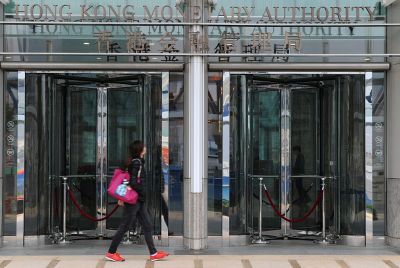
That's because of the Linked Exchange Rate System. Under the arrangement, the Hong Kong Monetary Authority's base rate is set by formula — pinned to the lower bound of the Fed's target range plus a fixed margin — so a Fed move becomes a Hong Kong move automatically, the same morning, with no meeting of Hong Kong's own.
Why most borrowers won't feel it yet
Here's the part that gets lost in that transmission story: most Hong Kong mortgage borrowers may not actually feel a September hike, even if one comes.
The bulk of new and existing Hong Kong mortgages float on a structure known as an H Plan, priced off the one-month Hong Kong Interbank Offered Rate plus a fixed spread — commonly around 1.3 percentage points — but capped at a ceiling tied to banks' prime lending rate. At HSBC and Hang Seng Bank, that cap sits at prime minus 2.5 percentage points; with prime currently at 5%, the effective ceiling works out to roughly 2.5%.
One-month HIBOR was fixed at 2.79% on Wednesday, according to the Hong Kong Association of Banks. Add the typical 1.3-point spread and the uncapped H Plan rate would run above 4% — well above the roughly 2.5% ceiling. In practice, that means most H Plan borrowers are already paying the capped rate, not the floating one. A further HIBOR rise, even one triggered by a Fed hike, costs them nothing unless it pushes the underlying rate high enough to matter, or a bank moves its prime rate — a separate, discretionary decision that has historically lagged Fed moves by months.
The dissent that's driving the odds traces to the Fed's July 29 meeting, where the FOMC held rates at 3.5% to 3.75% in a 9-3 vote — its most divided decision in a decade. All three dissents, from the presidents of the Cleveland, Minneapolis and Dallas Fed banks, favored a quarter-point hike on inflation concerns.
What followed complicates the "inflation is forcing a hike" read embedded in some market chatter. A weak July jobs report on August 1 sharply cut hike odds, and the July inflation data that followed on August 12 came in benign — headline CPI up just 0.1% on the month and 3.4% annually, both cooling from June and in line with forecasts — reinforcing the pullback rather than reversing it. Markets are pricing roughly a one-in-three chance of a September hike as of this week, down from levels seen right after the July dissent.
None of that erases the underlying pressure. Inflation remains above the Fed's 2% target, and the three dissenting regional presidents have continued to argue publicly for tighter policy. Warsh's own approach — he has stripped forward guidance from FOMC statements since taking over — means Friday's speech is being watched as one of the only windows into his thinking before the vote.
For Hong Kong's currency-issuing banks, the mechanics cut the other way. HSBC has told investors that a HIBOR move higher supports net interest income, though the bank has said its sensitivity to HIBOR swings has roughly halved since the first quarter as it hedges more of the exposure. HSBC, Bank of China (Hong Kong) and Hang Seng Bank — the territory's three note-issuing lenders — all carry documented exposure to where HIBOR settles, through the loan books priced against it.
The mechanism that ties Hong Kong to a rate-setter with no local vote isn't new. What's specific to this week is the size of the gap between the mortgage rate borrowers are actually paying and the one theoretically exposed to Friday's speech — a gap wide enough that, for now, a September hike would need to travel through a separate, sticky decision at three commercial banks before it reaches a monthly mortgage bill.
- MOST POPULAR IN Economy